ad insertion scte-35 hls

SCTE-35 Ad Insertion: Easiest Way to Professional Ads

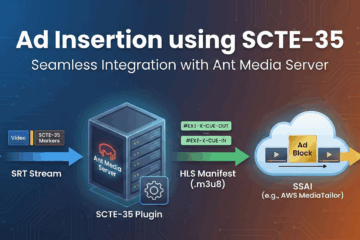
SCTE-35 is the industry standard that enables TV networks and professional broadcasters to seamlessly cut away from a live event to a commercial break at exactly the right moment. It isn’t done manually by someone hitting a switch. It’s fully automated using SCTE-35 markers embedded in the video stream. If you are building a streaming platform, you likely want to monetize your content. However, Ant Media Server (AMS) does not insert the ads itself. Instead, Read more…

Ant Media Server Hourly Subscription

Ant Media Server Hourly Subscription | Pay As You Go Uptime-Based Pricing

Ant Media Server Hourly Subscription is designed for modern live streaming and WebRTC workloads that demand flexibility, scalability, and cost control. Instead of committing to fixed monthly or annual plans, you pay only for the hours your Ant Media Server is actively running. This pay-as-you-go model ensures you never spend money on idle servers. Ant Media Server Hourly Subscription for Cost Optimization One of the biggest challenges in live streaming infrastructure is cost predictability. Traditional Read more…

what is webrtc

What is WebRTC and how does it work? Real-time communication with WebRTC [2026 Update]

WebRTC is an open-source protocol suite that lets browsers and devices stream audio, video, and data to each other in under 500 milliseconds — no plugins, no downloads, no third-party software. Standardized by the W3C and IETF under RFC 8829 in January 2021, it’s the technology behind video consultations, live auctions, multiplayer gaming, and any situation where a second of lag is one second too many. If you’ve ever wondered exactly how WebRTC pulls off Read more…

cloudformation

7 Essential Steps for Scaling Ant Media Server with AWS CloudFormation

Scaling Ant Media Server with AWS CloudFormation is a game-changer for anyone dealing with live video streaming demands. In an era where digital content consumption is skyrocketing, ensuring your streaming infrastructure can handle growth without downtime is crucial. Whether you’re broadcasting live events, hosting virtual classrooms, or delivering on-demand videos, scaling Ant Media Server with AWS CloudFormation provides automated, resilient solutions. This approach leverages AWS’s powerful tools to create a clustered environment that scales dynamically. Read more…

Insurance video communication by Ant Media

Enabling Secure, Low-Latency Video Communication for Insurance Enterprise: AppMan Case Study

The insurance industry is rapidly adopting digital workflows, but insurance video communication solutions must meet strict requirements around security, compliance, and real-time performance. Use cases such as remote car inspection and remote insurance sales demand live video communication that is not only low latency and high quality, but also fully compliant with regulatory standards. AppMan Co., Ltd. partnered with Ant Media Server to build a secure, enterprise-grade insurance video communication platform using WebRTC, designed to Read more…

Frame Rate Live Streaming

Frame Rate Optimization for Ant Media Server: WebRTC & Ultra-Low Latency Streaming

Frame rate configuration directly impacts streaming quality and viewer experience. This guide covers frame rate optimization for Ant Media Server, including WebRTC-specific settings, adaptive bitrate strategies, and mobile optimization techniques based on official specifications. We’ll explore which frame rates work best for different content types, how to configure Ant Media Server for optimal performance, and troubleshooting techniques for common issues. Whether streaming webinars, gaming content, or mobile broadcasts, you’ll find practical configurations for production environments. Read more…

WebRTC vs RTMP

WebRTC vs RTMP: Which Streaming Protocol is Right for You?

Choosing the right streaming protocol impacts your viewer experience, infrastructure costs, and technical complexity. WebRTC and RTMP serve different purposes in modern streaming workflows. Understanding each protocol’s strengths helps you build efficient streaming architecture. WebRTC delivers sub-500 millisecond latency for browser-based viewers. RTMP provides reliable encoder-to-server transmission with 3-5 second delay. Many professional workflows combine both protocols—RTMP for contribution and WebRTC for playback. What is a Streaming Protocol? A streaming protocol defines how video, audio, Read more…

Ant Media Server and Aura eGaming -Online Gaming Live Streaming

Transforming Online Gaming Live Streaming with Sub-Second Latency: Aura eGaming Case Study

Online gaming live streaming demands speed, precision, and reliability. In competitive gaming and interactive entertainment, even milliseconds of delay can disrupt gameplay, reduce engagement, and impact user trust. Aura eGaming operates in the online gaming industry, delivering live and interactive gaming experiences to users across multiple regions. To meet growing demand and maintain real-time performance, Aura eGaming partnered with Ant Media Server to build a scalable, ultra-low latency live streaming infrastructure powered by WebRTC. The Read more…

TCP vs UDP

TCP vs UDP: What’s the Difference for Video Streaming?

Video streaming has become the backbone of digital communication. From live streaming broadcasts to video conferencing and surveillance systems, choosing the right transport protocol can make or break your streaming quality. The two primary protocols that govern how data packets travel across networks are TCP (Transmission Control Protocol) and UDP (User Datagram Protocol). Each protocol operates differently, directly impacting latency, reliability, and overall streaming performance. This guide explain how TCP and UDP work for video Read more…

Video Resolution

Video Resolution Guide for Broadcasters: 720p, 1080p, 4K & Best Settings

Choosing the right video resolution affects everything from viewer experience to infrastructure costs. Professional broadcasters using platforms like Ant Media Server need to understand how resolution impacts streaming quality, bandwidth consumption, and audience reach. This guide explains video resolution fundamentals and provides practical frameworks for selecting the optimal resolution based on your broadcast type, audience capabilities, and technical constraints. Table of Contents What is Video Resolution? Video resolution measures the number of pixels in each Read more…