WebRTC-vs.-MoQ-featured

WebRTC vs. MoQ — Two Protocols, One Platform Completely Built for Both

Two powerful protocols. One streaming platform built for both. Lets focus on what happens today and what’s waiting for us in the future as Ant Media Server perspective. The live streaming world is buzzing about Media over QUIC (MoQ) — a new IETF-standard protocol that promises to combine the scalability of CDN-based streaming with the sub-second latency as we used to associate with WebRTC only so far. At Ant Media Server, we’ve built our platform Read more…

16:9 aspect ratio video streaming guide for broadcasters and developers

16:9 Aspect Ratio for Video Streaming in 2026

If you’ve ever set up a live stream — through OBS, a mobile broadcast app, or a custom WebRTC pipeline — you’ve already made decisions about the 16:9 aspect ratio without necessarily thinking about them. Your camera defaulted to 1280×720. Your streaming software suggested 1920×1080. Your viewers watched on a widescreen TV or laptop. Every step in that chain runs on 16:9. For broadcasters and developers building on Ant Media Server, 16:9 isn’t just the Read more…

Video Aspect Ratio for Live Streaming

Video Aspect Ratio for Live Streaming: 7 Ratios Explained

Video aspect ratio determines the proportional width-to-height relationship of every video frame delivered to viewers — and in live streaming, it directly controls bitrate requirements, adaptive bitrate ladder configuration, GPU transcoding load, and WebRTC negotiation parameters. Choosing the wrong ratio produces black bars, pixel distortion, or over-provisioned bandwidth consumption at every quality tier. In 2026, streaming engineers configure aspect ratio at three pipeline stages: ingest (RTMP/SRT/WebRTC input), transcoding (resolution ladder generation), and playback (HLS/DASH manifest Read more…

MPEG-DASH adaptive bitrate streaming protocol diagram showing how video segments are delivered over HTTP from origin server through CDN to viewer devices at multiple quality levels

MPEG-DASH Streaming: Complete Guide to Adaptive Video Delivery over HTTP

Every viewer expects smooth, buffer-free video — whether they are watching a live sports broadcast on a phone or streaming a feature film on a smart TV. Behind the scenes, the protocol handling that delivery determines whether the experience holds up under real-world network conditions. MPEG-DASH (Dynamic Adaptive Streaming over HTTP) is the only ISO-ratified international standard designed specifically for this job. Ratified in 2012 under ISO/IEC 23009-1 and revised most recently in 2022, MPEG-DASH Read more…

img-4J7rAafvNyOzXERS1CUNncV2

Harness Powers of DeepAR and Custom Overlay with Ant Media Android SDK

Live streaming has evolved beyond simple camera-to-viewer broadcasts. Today’s audiences expect interactive, engaging content with visual effects, branding elements, and augmented reality features. This guide walks you through integrating DeepAR (real-time AR filters) and Custom Canvas Overlays (logos, watermarks) into an Android live-streaming app powered by Ant Media Server. The sample project has two ready-to-run Activities: DeepARActivity.java and CustomCanvasActivity.java. The key to making both work is IWebRTCClient.StreamSource.CUSTOM — it tells the Ant Media Server’s WebRTC Android SDK to let you push video frames yourself, so Read more…

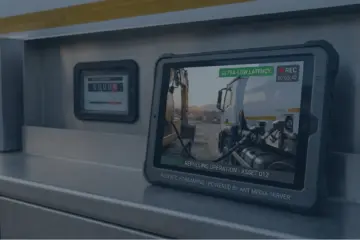
real-time video monitoring-Repos Energy

From Delayed Visibility to Real-time Intelligence — How Repos Energy Transformed Fuel Operations

For companies managing fuel distribution across multiple locations, Real-Time Video Monitoring is essential for complete visibility. Without real-time insights, operations slow down, decisions get delayed, and inefficiencies grow. Repos Energy, a leader in on-demand fuel delivery, faced this exact challenge. As their platform scaled, they needed a way to see operations in real time—not minutes later, not delayed, but instantly. That’s when they turned to Ant Media Server. The Challenge Growing fast, but flying blind Read more…

Vod-streaming

What is VOD Streaming? Definition, How It Works, and 3 Monetization Models [2026]

VOD streaming is the content delivery model that serves pre-recorded video to viewers on demand — without broadcast schedules, physical media requirements, or real-time transmission constraints. According to Cisco’s Annual Internet Report, internet-connected devices are projected to exceed triple the global population, with 70% of the world owning mobile devices and demand for 4K/UHD content doubling alongside that growth. This article covers the definition of VOD streaming, how VOD works at the infrastructure level, the Read more…

Versatile Video Coding

Versatile Video Coding (VVC): H.266 Codec Guide for Streaming

Streaming platforms transmit over 1 billion hours of video daily, and codec efficiency determines the bandwidth cost of every single hour. A platform serving 10,000 concurrent 4K streams consumes approximately 120 Gbps with H.265 (HEVC) compression. Versatile Video Coding (VVC), also known as H.266, cuts that figure to approximately 60–70 Gbps at equivalent visual quality—a 40–50% bitrate reduction that translates directly into lower CDN costs, reduced storage consumption, and higher-quality delivery on bandwidth-constrained networks. VVC Read more…

NAB 2026 Ant Media

Ant Media Unveils Game-Changing MoQ & AI Demos at NAB Show 2026

The countdown to NAB 2026 has begun, and we’re excited to announce that Ant Media will be part of this year’s premier gathering for media, entertainment, and technology innovators. At Ant Media, our mission has always been clear: to empower businesses and developers to take steps towards their dreams by offering ultra-low latency streaming, scalable infrastructure, and cutting-edge real-time communication solutions. NAB 2026 provides the perfect stage to showcase how far streaming technology has come—and Read more…