WebRTC Browser Support

WebRTC Browser Support & Compatibility in 2026

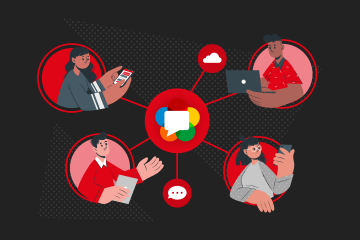
WebRTC has become a critical technology for industries ranging from telehealth and online education to live streaming, enterprise collaboration, and surveillance. By enabling real-time audio, video, and data communication directly in browsers, it eliminates the need for plugins or third-party installations.However, despite its maturity, Official WebRTC specifications support remains inconsistent across browsers and platforms. Each browser implements the standard differently, particularly in terms of codec support, API implementation, and performance optimization. For organizations deploying real-time Read more…

1*ZAIUpqHK0Y8PUJK0prW8KA

HLS Streaming with Amazon CloudFront: 7-Step Setup Guide [2026]

Amazon CloudFront scales HLS live streaming to millions of concurrent viewers by caching MPEG-TS segments at 600+ global edge locations, reducing origin server load by up to 95% compared to direct delivery. Ant Media Server functions as the CloudFront origin, ingesting RTMP or WebRTC streams and generating the HLS manifest and segments that CloudFront distributes globally. This guide covers the complete 7-step CloudFront distribution setup, cache policy configuration, error page TTL tuning, and HLS stream Read more…

Video Bitrate vs Resolution

Bitrate vs. Resolution: 4 Key Differences and Their Role in Video Streaming [2026 Update]

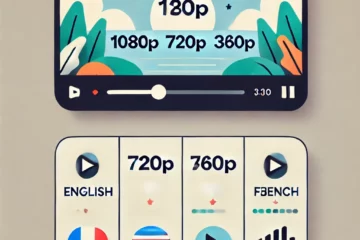
Video bitrate vs resolution is one of the most common — and misunderstood — concepts in video streaming, directly impacting video quality, bandwidth usage, and viewer experience. Whether you’re streaming a live sports event, producing video content for YouTube, or hosting a business webinar, your audience expects sharp visuals and smooth, lag-free playback. Achieving this goes beyond investing in the latest camera or microphone—the key lies in understanding and balancing video bitrate and resolution. These Read more…

peer2peer

WebRTC Peer-to-Peer Communication: How P2P Works in 2026

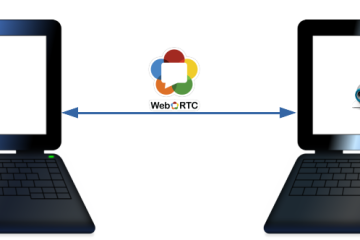
WebRTC peer-to-peer (P2P) communication lets two clients exchange audio and video directly — after a short signaling handshake, media travels between peers without touching a media server. That single architectural decision cuts latency to sub-100ms on a good path and eliminates server-side bandwidth costs for the media stream entirely. In this guide you will learn exactly how that handshake works: the SDP offer/answer exchange, ICE candidate gathering, STUN and TURN roles, and the full WebSocket Read more…

tensorflow logo social image 1

Object Detection with TensorFlow

TensorFlow object detection in Java uses pre-trained neural network models to identify and locate objects within image frames — without requiring Python runtimes or external ML services in your JVM application stack. The TensorFlow Java API loads SavedModel or Protocol Buffer graph definitions, runs inference against preprocessed image tensors, and returns bounding box coordinates alongside numeric class IDs that a label map file resolves into human-readable names such as person, car, or bicycle. This guide Read more…

WebRTC Signaling Server

WebRTC Signaling Servers: Everything You Need to Know [2026 Update]

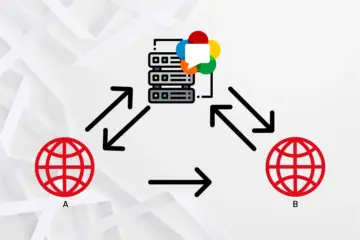
Before the WebRTC signaling server, let’s briefly explain what WebRTC is. WebRTC stands for Web Real-Time Communications. It is a powerful technology and an open-source streaming protocol. WebRTC is HTML5 compatible, and it allows you to add real-time communications to your apps to directly communicate between browsers and devices. You can do that without any plugins. It is supported by all major browsers, including Safari, Google Chrome, Firefox, and Opera. I’m sure you’ve heard of Read more…

HLS Merger

Supercharge HLS Streaming: Seamlessly Merge Streams with HLSMerger

HLS (HTTP Live Streaming) is a widely used protocol for live streaming due to its compatibility with Content Delivery Networks (CDNs), making it suitable for streaming to large audiences. Traditionally, HLS streams have a latency of about 8–10 seconds, but with Low Latency HLS (LL-HLS), this can be reduced to around 3 seconds. Ant Media Server supports both HLS streaming and LL-HLS. However, content creators and broadcasters face challenges when it comes to merging individual Read more…